
Active Warrants in Jefferson County
Jefferson County does not offer a single public website where you type a name and see active warrants. That gap matters, because scammers use it. The Jefferson County Sheriff's Office warns that no member of the office will call to demand money over the phone. Scams often involve missed jury duty, court themes, and warrant threats, and callers may even spoof real office numbers.
Do not pay anyone who calls demanding warrant money. Hang up and call the Sheriff's Office or the court using official numbers. The Sheriff's Office does not collect warrant payments by phone.
The Sheriff's Criminal Division does handle warrants, subpoenas, and the service of thousands of protective and domestic violence orders each year. To confirm whether a warrant exists, you work through the court that issued it and the divisions that handle bonds and case information.
There is a reason the list is not posted for open name searches. An active warrant that has not been served is often kept out of public view so a person does not evade arrest, and so investigations are not tipped off. That privacy and law-enforcement interest is why the official path is a case-and-court check rather than a public warrant feed. It also means any site that claims to show a live county warrant list by name should be treated with caution.
Types of Warrants in Jefferson County
Not all warrants are the same. The kind of warrant shapes which division to call and how to clear it. A few show up most often in Jefferson County.
- Arrest warrant - a court order to arrest based on a charge and probable cause.
- Bench warrant - issued by a judge, often for a failure to appear or contempt.
- Capias - an order to take a person into custody for nonappearance or to enforce a judgment.
- Search warrant - authorizes a search or seizure and is not publicly searchable before it is served.
- Circuit Court warrant - processed through Circuit Criminal for felony matters.
- Traffic or failure-to-appear warrant - may follow a missed District Court traffic obligation.
Protective-order and domestic-violence service is handled in part by the Sheriff's Criminal Division and the Domestic Violence Intake Center.
How Warrants Are Issued and Served in Jefferson County
A warrant starts with a court. A judge issues an arrest or bench warrant, and a grand jury indictment can lead to a Circuit Court warrant for a felony. Once issued, the warrant goes to law enforcement for service. The Jefferson County Sheriff's Office Criminal Division handles warrant service along with subpoenas, summonses, and evictions, and it serves thousands of protective and domestic violence orders each year.
The Sheriff also keeps order in the courts. Under Kentucky law on sheriff duties, the office attends the courts, maintains security, and carries out court orders. That is why warrant service, court security, and protective-order service all run through the same office. For emergency protective orders, the Domestic Violence Intake Center operates around the clock at the Hall of Justice and is staffed in part by Family Court deputy clerks.
Because several agencies make arrests in the county, a warrant may be served by Louisville Metro Police, the Sheriff, or another agency. The booking that follows lands at the Louisville Metro Department of Corrections, which is why the jail roster is a useful check after an arrest.
How to Search Jefferson County Warrants
Since there is no public warrant lookup, the practical search is an official-channel search. Start with the case, then confirm by phone. Never act on a caller's claim about a warrant without checking through these steps.
- Search court records and the docket for an active case and court date.
- For a misdemeanor or traffic matter, call District Criminal and Traffic at 502-595-3060 or 502-595-4428.
- For a felony or Circuit Court matter, call Circuit Criminal at 502-595-3009.
- If an arrest already happened, use the inmate search or call the jail information line at 502-574-8477.
- Consider counsel or public defender eligibility before you appear on a warrant.
Have the basics ready when you call: the full legal name, a date of birth, and any case or citation number you already have. That information helps the division find the right file fast and tell you whether a warrant is active and how to clear it.
Jefferson County Warrant Search Fields
Because no public active-warrant database exists, the official channels show case and docket fields rather than a dedicated warrant lookup. The table lists what each official tool actually returns.
| Channel | Searchable By | Shows |
|---|---|---|
| KYeCourts public case access | Party name or case detail | Case number, parties, status |
| Court docket search | County, division, date | Court date, courtroom, setting |
| Inmate search | Name or custody number | Booking, charges, bond, next date |
| Sheriff process search | Civil process detail | Service of process papers, not criminal warrants |
None of these is a name-based warrant search, so use them together and confirm with the issuing division.
What a Jefferson County Warrant Record Shows
When warrant information does surface through a case file or docket, it carries a limited set of fields. There is no public warrant lookup that returns these on demand, but the items below describe what a related court entry may include.
| Field | What It Shows |
|---|---|
| Case Number | The court case tied to the warrant entry. |
| Party | The person named in the case or warrant. |
| Warrant Type | Arrest, bench, capias, or Circuit warrant. |
| Issuing Court | Circuit or District division that issued it. |
| Status | Active, served, recalled, or resolved. |
| Court Date | The next setting tied to the case, if any. |
Search and active warrants before service are not public, so the most reliable confirmation is a call to the issuing division.
What to Do If You Have an Outstanding Warrant
Acting early beats waiting. If you believe you have an outstanding Jefferson County warrant, confirm it through the court divisions, not a phone caller. The District Criminal and Traffic division can give case information and handle bonds, and the largest division in the clerk's office runs limited services around the clock for bonds and emergency petitions.
Bond rules vary by type. The division accepts surety bonds at any time with a $25 filing fee, and surety or partially secured bonds require Kentucky residency and a Kentucky ID. Property bonds run Monday through Friday from 7:30 a.m. to 4 p.m. and require Kentucky property, Kentucky residency, and a Quitclaim Deed approved by a judge. Money orders cannot be used to post bond. Knowing which bond fits your situation can save a second trip to the courthouse.
Important: A real warrant is cleared through the court and bond process, never by sending money to someone who calls you. Verify every warrant claim through official Sheriff's Office or court numbers first.
Reporting and Verifying Warrants
If you want to report someone wanted on a warrant, contact law enforcement through official channels rather than acting on rumor. Anonymous tips can go to local law enforcement, and the Sheriff's Office handles warrant and protective-order service. For verification of a warrant tied to you or a family member, the court division that issued it is the authority, not a third party.
The Jefferson County Sheriff's Office homepage posts its service links and the scam warning that should guide how you respond to any warrant call.
If you get a call about a warrant, slow down. A real court process does not start with a stranger demanding gift cards, wire transfers, or cash to avoid arrest. Note the number, hang up, and call the Sheriff's Office or the issuing court yourself using a number you look up, not one the caller gives you. If money has already changed hands, report it to law enforcement so it can be documented.
Restricted Jefferson County Warrant Records
Search warrants are not public before they are executed, and active criminal warrants are generally not posted for open name searches. Sealed indictments and grand jury matters stay closed until they are returned or served, since premature disclosure could defeat the purpose of the warrant. Juvenile matters are confidential under state law, so warrant or custody information about a minor is restricted.
One related public lookup does exist separately. The Kentucky State Police maintains a public Sex Offender Registry, which is a registry search rather than a warrant search. The Kentucky State Police Sex Offender Registry information page explains how that registry works and how to search it.
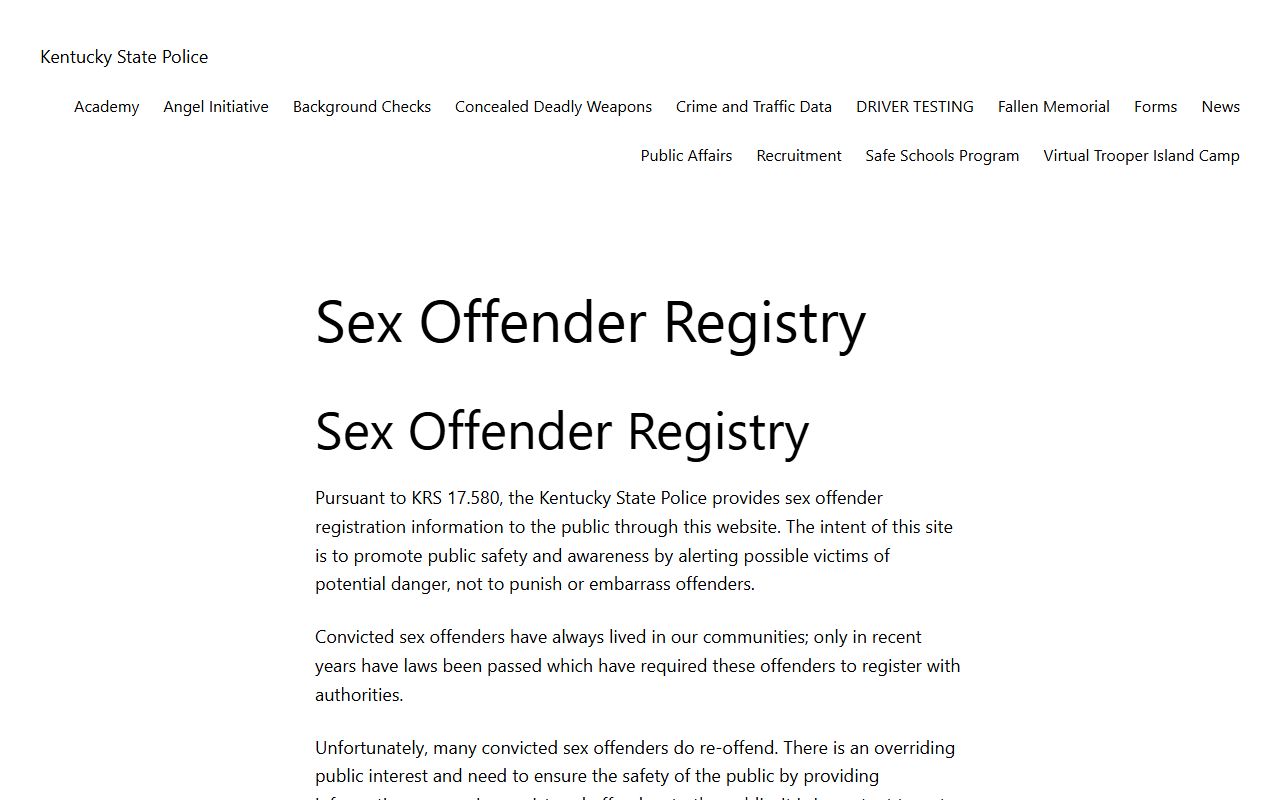
That registry is a public-safety tool and is not a substitute for confirming a warrant through the court. The state says registry information is provided to promote public safety and awareness, not to punish or embarrass registrants, and misuse for harassment is prohibited. Treat it as a separate official lookup that answers a different question than a warrant search.